

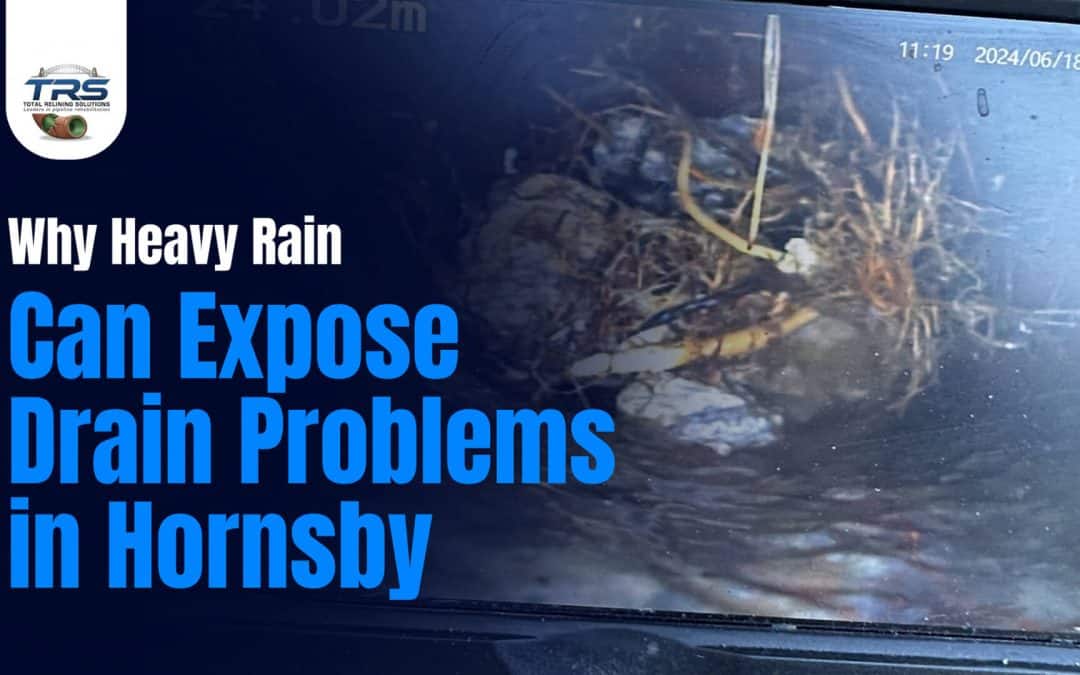
Heavy rainfall can reveal drainage problems that remain unnoticed when water flow is relatively low. As more water enters the drainage system, existing restrictions can prevent it from moving away as expected. Homeowners, drain problems in Hornsby may only become aware of these problems during wet weather, even though the underlying conditions have been developing for some time.
What Heavy Rain Can Expose
Underground drainage pipes can develop restrictions gradually, allowing water to pass through until heavier rainfall increases the volume entering the system. When additional water reaches a pipe that is already partly obstructed, its reduced capacity can become much more apparent.
Leaves, sediment and other debris may collect inside stormwater pipes, particularly where material becomes trapped around bends or damaged sections. A period of heavy rain can carry further debris into the system, worsening an obstruction that had previously caused little noticeable trouble.
Tree roots can also enter pipes through cracks or damaged joints, expanding inside the line and reducing the available space for water to pass. Ageing pipes may develop fractures, displaced joints or sections that have shifted, creating places where material collects and water movement becomes restricted.
Although heavy rainfall can bring these faults to attention, removing the immediate obstruction may not resolve damage already present within the pipe.
Warning Signs of Drain Problems in Hornsby
Water collecting around outdoor drains during an unusually intense downpour does not always mean an underground pipe is damaged. However, drainage problems that appear during repeated periods of rainfall deserve closer attention, particularly when ordinary rain is enough to cause the same symptoms.
Pooling water that remains around stormwater outlets after the rain stops can suggest that runoff is not moving through the system efficiently. Overflowing outdoor drains or sections of the yard that repeatedly become waterlogged may also indicate a restriction or inadequate drainage capacity.
Problems affecting household wastewater pipes can present differently, with slow drainage, gurgling sounds or unpleasant odours coming from sinks and other fixtures. Wastewater backing up through a shower or toilet can indicate a more serious blockage and should be assessed promptly.
A blockage that appears to improve after the rain passes may return once the system is placed under greater demand again. When the same symptoms keep occurring, investigating the underlying condition is more useful than repeatedly treating each incident as a separate problem.
Finding The Cause Inside Drainage Pipes
Recurring symptoms do not reveal whether a drain contains accumulated debris, intrusive tree roots or damage that is restricting water flow. A professional pipe investigation can establish what is happening inside the affected line before deciding on the most effective response.
CCTV drain inspection allows a plumber to examine the internal condition of underground pipework and locate obstructions, cracks or displaced joints. Footage can also help determine whether a blockage is caused primarily by material that can be removed or by a defect that needs repair.
Where debris is responsible, professional drain clearing may be enough to restore normal drainage without further work to the pipe. If inspection identifies cracks or other suitable damage, pipe relining may offer a way to repair the existing line without extensive excavation.
Choosing the repair according to the condition of the pipe helps address the reason drainage problems return, rather than only restoring flow temporarily.
Addressing Problems Before Further Rainfall
Repeated drainage problems are worth investigating before another downpour places additional demand on the affected pipes. Professional assessment can establish whether clearing an obstruction is sufficient or whether damaged pipework needs attention to prevent the same symptoms returning.
At Total Relining Solutions, we investigate drainage problems in Hornsby using CCTV inspections and recommend pipe repairs where the findings show they are needed. Our approach focuses on identifying the underlying fault and selecting a practical solution suited to the condition of the drainage system.
Arrange a professional drain assessment to identify recurring problems before the next period of heavy rainfall.


Recent Comments